Nutrient RNI refers to
For healthy people of specific gender, age, and physiological status, the intake level can meet 97% to 98% of the individual's daily nutritional needs. If this standard is reached for a long time, the lack of corresponding nutrients can basically be avoided.
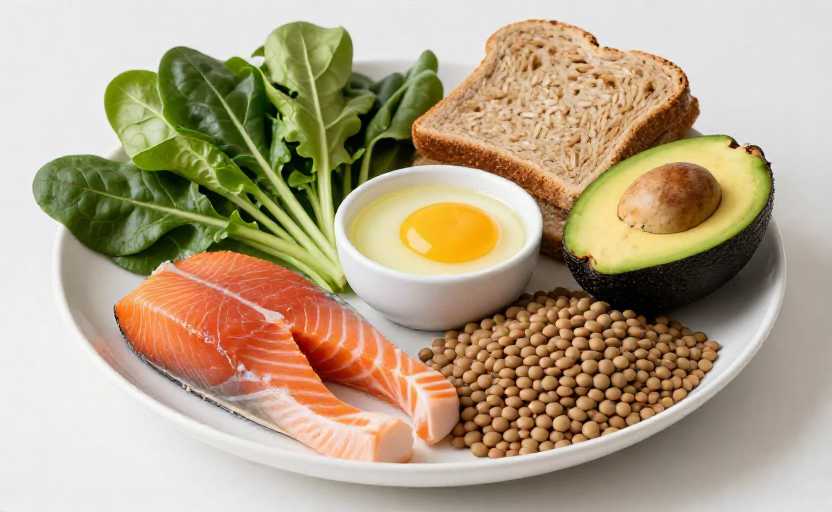
For example, if you go to a community for nutritional consultation, the staff will tell you that adult women should eat 55g of protein and 20mg of iron every day. These values correspond to the protein and iron RNI for ordinary adult women. We often see the "Nutrient Reference Value (NRV) %" on food packaging, which is a general reference standard based on the RNI of each group of people. For example, a certain milk contains 100 mg of calcium per 100 ml, and the NRV% is 13%. This means that drinking 100 ml of this milk can meet about 13% of the daily calcium RNI for ordinary people. It is very convenient to calculate it when collecting nutrients on a daily basis.
This value is not determined by head. The core basis is another indicator called "average requirement (EAR)" - EAR is the amount that just meets the needs of 50% of people in a certain group. For example, 100 healthy 30-year-old women, 50 of them eat 18mg of iron every day. Then the iron EAR of this group is 18mg. Add 2 standard deviations to this basis, and calculate the amount that can cover more than 97% of the people, which is the RNI. There are also many nutrients where the accurate EAR cannot be calculated due to insufficient research data, and there is no corresponding RNI. At this time, "appropriate intake (AI)" will be used instead. For example, the energy intake standard for infants under 6 months old uses AI. After all, it is impossible to conduct large-scale nutrient intake experiments for such young children to obtain data, and can only rely on the intake of healthy breastfed babies to calculate.
However, the industry has always had different opinions on the positioning of RNI. Scholars in the field of traditional public nutrition generally believe that RNI is a universal standard suitable for the general population. Setting it too high may increase the risk of overdose of nutrients. For example, the RNI for vitamin A for adults is 800 μg RAE for men and 700 μg RAE for women. If you blindly pursue the so-called "optimal amount" and eat more than 3,000 μg, there is a possibility of chronic poisoning in the long run. However, practitioners in functional nutrition and sports nutrition often feel that RNI is only the "minimum threshold for not getting sick" and not the "intake to maintain optimal conditions." For example, the RNI for vitamin C for ordinary people is 100mg/day, but many studies have shown that people who eat 200~300mg daily have better cold recovery speed and skin condition. As long as it does not exceed the tolerable maximum intake of 2000mg, there is basically no safety problem.
I encountered this disagreement when I helped a fitness friend calculate his diet two years ago. He weighs 75kg. According to the protein RNI for ordinary adult men, 65g per day is enough. But if he wants to gain muscle, he must eat at least 1.6g/kg of body weight per day, which is 120g. At this time, the RNI is of little reference significance. I also accompanied my pregnant girlfriend to a prenatal check-up. During the second trimester, her iron RNI increased from 20 mg for ordinary women to 24 mg. She couldn't supplement it by eating red meat and spinach every day, so the doctor directly prescribed low-dose iron. This is also a typical use of RNI to adjust for special physiological conditions.
For those of us who don't exercise or are not sick, we don't need to regard RNI as a hard target that must be stuck every day, and we don't need to use a food scale to calculate milligrams for every meal. For example, if you work overtime and eat takeout for two or three days in a row and don't eat much fruits and vegetables, the vitamin C will most likely not reach the RNI. In the next two days, you can make up for it by eating two more oranges and half a catty of green leafy vegetables. As long as the overall intake for a week is roughly enough, there will basically be no problem of nutritional deficiencies. Many people will worry, "Will I be deficient in nutrients if I don't eat RNI today?" In fact, there is no need to do so. After all, RNI covers 97% of people. Maybe you are the remaining 3% who have lower metabolic needs. However, if you are far below RNI for a long time, the risk of deficiency will be much higher.
To put it bluntly, RNI is a "passing line" for nutritional reference. It is not an unshakable standard answer. It is most suitable to adjust according to your own physical condition and living habits.
Disclaimer:
1. This article is sourced from the Internet. All content represents the author's personal views only and does not reflect the stance of this website. The author shall be solely responsible for the content.
2. Part of the content on this website is compiled from the Internet. This website shall not be liable for any civil disputes, administrative penalties, or other losses arising from improper reprinting or citation.
3. If there is any infringing content or inappropriate material, please contact us to remove it immediately. Contact us at: